The global toys market was valued at approximately USD 108.7 billion in 2023, according to Grand View Research. That figure covers many toy categories; it does not measure bubble gun sales specifically. For wholesale buyers, it offers useful context, not a demand forecast. The Toy Association’s trend reports also track how play preferences and product features evolve. Those signals can guide product selection, but local customer feedback still matters.
A bubble gun machine may look simple on a product page. In practice, buyers need to assess bubble output, battery performance, refill access, packaging strength, and sample consistency. Test the trigger with small hands. Check whether liquid leaks when a unit sits on its side. Ask suppliers for clear specifications and inspect production samples before placing a large order. Small details count.
This list compares ten options through a wholesale lens, including usability, build quality, and purchasing considerations. It is not a substitute for testing products or confirming supplier claims. A low unit price can look attractive, yet damaged cartons or inconsistent output may erase the savings. That assumption deserves a second look. Market reports describe broad trends; they cannot tell you which model will sell in your store. Use the comparison as a starting point, then weigh order quantities, customer needs, and after-sales support before choosing.
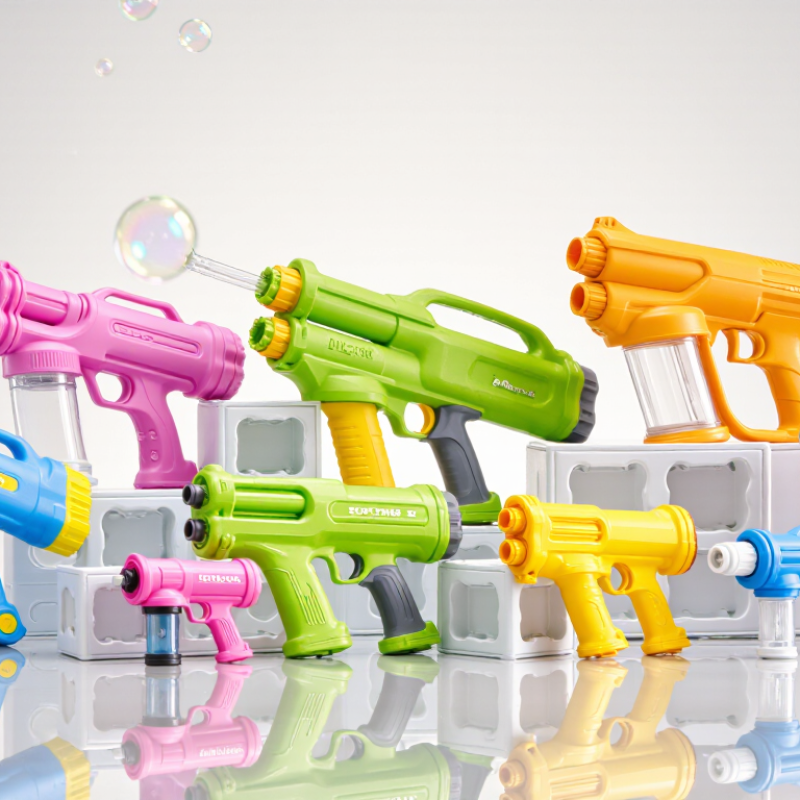
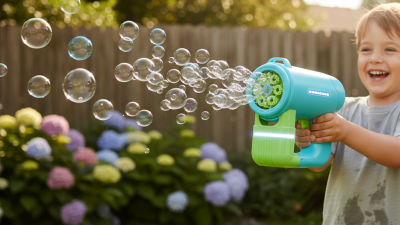
A bubble gun machine is a handheld toy that produces a stream of soap bubbles with little effort. Most models combine a trigger, a small motor, a fan, and a container for bubble solution. When the trigger is pressed, the motor turns the fan and moves a bubble-making wand or ring through the solution. Air passes across the thin film, forming bubbles that float away. Simple mechanism. Designs vary, so buyers should check how the wand is supplied with solution and whether the container is easy to refill.
For wholesale buyers, understanding these parts helps when comparing models and assessing everyday use. A well-fitting reservoir can reduce spills, while a steady fan may create a more even bubble stream. Battery type, grip size, and removable parts also affect handling and upkeep. Performance depends on the solution, too; thick or diluted liquid may produce fewer bubbles. Results are not always perfect. A few bubbles may pop quickly, especially outdoors in dry or windy conditions.
Tips: Test a sample with the intended solution before ordering in quantity. Check that the trigger responds smoothly and the fan starts consistently. Keep the wand clean after use, since dried residue can interrupt bubble formation. Small details matter.
A bubble gun is a battery-powered toy that typically rotates bubble-forming wands through liquid and uses a small fan to blow bubbles away from the nozzle. The configurations below are practical product types, not specific brands or measured performance rankings. Features and specifications vary by supplier, so confirm samples, safety documentation, and final specifications before ordering.
| Product Type | How It Makes Bubbles | Typical Power Setup | Liquid Feed | Typical Wholesale Fit | Main Advantage | Buyer Checks |
|---|---|---|---|---|---|---|
| 1. Compact single-wheel bubble gun | A small motor turns one wand wheel through the solution; a fan directs air across the coated wands. | Commonly disposable AA or AAA cells; exact count depends on the design. | Small integrated reservoir or a dipping tray at the nozzle. | Entry-level toy ranges, party favors, and low-price retail assortments. | Simple construction and a compact size can make it easy to pack and display. | Check whether batteries and bubble solution are included, and inspect for leakage around the reservoir. |
| 2. Multi-ring bubble gun | Several wand openings pass through solution and are exposed to airflow from the internal fan. | Usually battery-powered; some versions use rechargeable cells. | Integrated reservoir positioned below or around the wand assembly. | Mid-range toy lines and gift assortments seeking a more visible bubble effect. | Multiple coated openings can produce several bubbles in each rotation. | Check that the rings rotate freely and that the reservoir supplies liquid evenly without spilling. |
| 3. High-wand-count bubble gun | A motorized wheel carries many small wands past a solution source while a fan blows through the outlet. | Often uses a multi-cell battery compartment or a rechargeable battery pack. | Typically a larger integrated tank than on compact models. | Promotional toys and seasonal products positioned around a fuller bubble stream. | More wand openings can increase the number of bubble-forming points per rotation. | Request a sample test for wand alignment, fan airflow, liquid splashing, and ease of cleaning. |
| 4. USB-rechargeable bubble gun | Uses the same rotating-wand and fan principle, with a rechargeable battery powering the motor and fan. | Rechargeable internal battery; charging commonly uses a USB cable. Confirm the specified input and cable type. | Integrated reservoir or removable solution container, depending on the model. | Reusable toy ranges and buyers looking to reduce reliance on disposable batteries. | Rechargeability can be a convenient selling point for repeat use. | Verify battery capacity claims, charging instructions, included accessories, and applicable battery transport requirements. |
| 5. Large-reservoir bubble gun | A motor turns the wands through a deeper liquid supply while a fan pushes bubbles out through the front. | Battery-powered or rechargeable, depending on the product. | Higher-capacity built-in reservoir; capacity should be confirmed on the product specification sheet. | Outdoor play, longer play sessions, and retail products where fewer refills are a selling point. | A larger tank can reduce how often users need to refill during play. | Check filled weight, leak resistance in different orientations, refill access, and solution compatibility. |
| 6. Sealed-cartridge bubble gun | The powered wand wheel and fan operate as usual, while a replaceable liquid cartridge feeds the bubble-forming area. | Usually battery-powered; the cartridge itself does not power the mechanism. | Replaceable cartridge or bottle fitted to the toy. | Retail programs that also sell refill packs or replacement liquid. | Cartridge-based refills can simplify replenishment when the connection is well designed. | Confirm cartridge availability, fit, leakage performance, refill cost, and whether standard solution can also be used. |
| 7. Light-up bubble gun | A rotating wand wheel and fan make the bubbles; integrated LEDs illuminate the toy or nozzle. | Battery-powered or rechargeable; lights and bubble mechanism may share the same power source. | Usually an integrated reservoir near the wand assembly. | Gift, evening-event, and novelty toy assortments. | Lighting adds a visual feature without changing the basic bubble-making process. | Test the lights and bubble mechanism together, and check battery access and liquid protection around electrical parts. |
| 8. Trigger-operated bubble gun | A trigger switch activates the motor and fan; releasing it stops the mechanism on many models. | Most often disposable-cell powered, with rechargeable versions also available. | Small built-in reservoir or a removable liquid container. | Toy ranges where simple, user-controlled operation is important. | On-demand operation can help users control when bubbles are produced. | Check trigger feel, switch durability, age grading, and whether the toy restarts reliably after repeated use. |
| 9. Dual-outlet bubble gun | One motor-and-fan assembly directs airflow through two outlets, each supplied by its own wand section or a shared wheel assembly. | Battery-powered or rechargeable, depending on motor and lighting features. | Shared reservoir or separate solution channels, as specified by the design. | Novelty-focused assortments and products designed to look different from a standard single-nozzle toy. | Two outlets provide a distinct appearance and can distribute bubbles in more than one direction. | Check that both outlets receive airflow and solution consistently, and inspect the design for hard-to-clean channels. |
| 10. Bubble blaster with carry handle | A larger motorized wand assembly draws from a reservoir while one or more fans propel bubbles from a broad outlet. | Typically uses a larger battery compartment or a rechargeable battery pack. | Large built-in or removable reservoir; confirm the actual volume with the supplier. | Outdoor toys, event-season products, and higher-feature retail assortments. | A larger format can accommodate a bigger tank and a more substantial grip or carry handle. | Review total size and weight, balance when filled, spill testing, packaging dimensions, and battery compliance documents. |
Bubble gun machines generally fall into three practical types. Handheld trigger models use a small motor and one or several bubble rings. They suit party favors and counter displays because they are light and easy to operate. Check how the trigger feels and whether the refill tank can be removed without spilling. Small details matter.
Multi-nozzle models produce several streams at once, creating a fuller effect for outdoor events or toy demonstrations. Their higher output can use bubble solution quickly, so buyers should compare reservoir capacity and refill access. Automatic wheel-style machines work differently: a rotating wand passes through solution while a fan carries bubbles forward. These models can run continuously, but dried residue may slow the wheel. That assumption can be wrong.
Wholesale buyers should match each design to its sales channel, not just its bubble count. A compact gun may fit gift shelves, while a larger automatic unit may suit event suppliers. Ask for sample testing across repeated trigger cycles. Check for leakage after the machine is tilted, and note how easily the battery compartment opens. Output varies with solution quality and airflow, so supplier claims deserve verification. A quieter motor is useful indoors. Not every buyer needs maximum volume.
For wholesale buyers, compare bubble output, runtime, refill capacity, and build quality—not just the number of nozzles. A machine that produces many bubbles in a showroom may slow down after several minutes of continuous use. Test sample units with the same solution and battery setup. Small details matter. Check for drips around the reservoir, sticky triggers, and uneven output across units.
Grand View Research estimated the global toys market at USD 108.7 billion in 2023, with projected growth through 2030. Circana reported that global toy sales fell 7% in 2023 compared with 2022. These figures describe toys overall, not bubble gun machines specifically. They still point to a crowded category where dependable performance and clear product specifications can help buyers assess value. Do not treat broad market growth as proof of demand for one product.
Ask suppliers for tested runtime, refill volume, materials, and carton dimensions. Confirm whether the machine works with commonly available bubble solutions, and request consistent batch samples before placing a large order. Review packaging for clear setup and cleaning instructions; residue can dry around the nozzle and affect later use. A longer feature list is not automatically better. One trade-off is easy to miss: larger reservoirs may reduce refills, but add weight for smaller users. Check that balance in person.
Suggested evaluation weighting for wholesale comparisons—not measured market data. Adjust the percentages to fit your customers and sales channel. Compare runtime and recharge time under consistent test conditions, and verify safety, packaging, and supplier requirements before ordering.
For wholesale buyers, the best bubble gun machines balance shelf appeal with dependable performance. Circana reported that U.S. toy sales rose 6% in 2024, reaching $30.3 billion. That broad market figure does not predict bubble-gun demand, but it shows why buyers should check category-level sales before placing large orders. A useful ten-product shortlist might include compact handheld, dual-nozzle, high-output, rechargeable, battery-powered, fan-assisted, lightweight, trigger-lock, refill-ready, and display-friendly models. Each serves a different price point or shopper need.
Compare more than the advertised bubble count. Test each sample with the same bubble solution, then check spray consistency, motor noise, grip comfort, and leakage around the reservoir. Ask suppliers for carton dimensions, replacement-part availability, and clear operating instructions. These details matter when products travel through wholesale storage and retail shelves. A machine that performs well for five minutes may still disappoint after repeated use; that is easy to overlook.
Tips: Request samples from shortlisted suppliers and run a simple ten-minute test. Check whether caps stay secure during transport and whether refill bottles fit the opening. Confirm packaging details and documented product specifications before ordering. Treat promotional output claims cautiously, since test conditions may differ from real play.
Wholesale planning starts with evidence, not a low quote. Grand View Research valued the global toys market at about US$108.7 billion in 2024 and projected continued growth through 2030. That signals opportunity, not guaranteed demand for bubble gun machines. Circana reported U.S. toy sales fell 0.3% in 2024, while units sold rose about 1%. Build forecasts around cautious sell-through, seasonal demand, and storage costs. No forecast is perfect.
Ask suppliers for dated quotations, minimum order quantities, production lead times, and written defect policies. Request a pre-production sample. Test trigger response, bubble output, and leakage during a full session, then inspect the unit after ordinary carton handling. Compare battery access, packaging dimensions, spare-part availability, and quality inspection records. Ask for monthly production capacity, not just maximum capacity. It matters. Before committing to a large shipment, calculate landed cost per unit, including freight, packaging, and expected replacements. A small pilot order can reveal inconsistent output or damaged cartons before those problems multiply across a bulk purchase.