Buying toddler toys for international markets requires more than colorful packaging and attractive margins. It requires evidence, careful sourcing, and practical judgment. Circana reported that global toy sales declined by approximately 7% in 2023 across major markets. Inflation changed household spending, while parents still protected budgets for learning and developmental products. This tension makes product selection more important for global buyers.
Safety must guide every purchasing decision. The U.S. Consumer Product Safety Commission reported an estimated 231,724 toy-related emergency department injuries among children under 15 in 2023. Young children face particular risks from small parts, loose magnets, long cords, sharp edges, and weak battery compartments. A toddler may pull a wheel from a toy, chew a painted surface, or place a plastic piece in the mouth within seconds. Buyers should verify age grading, material specifications, laboratory testing, and traceable supplier records before discussing price.
International requirements also differ. ASTM F963 applies to toys sold in the United States, while EN 71 supports toy compliance in the European Union. ISO 8124 provides an important international safety reference. These standards do not replace supplier audits or product inspections. They support them. A certificate alone may not reveal inconsistent materials or production changes. No checklist is flawless. I may still overlook a market-specific requirement. Therefore, this guide presents ten practical toddler toys buying tips for global buyers, combining safety evidence, developmental value, durability, packaging clarity, consumer demand, and landed cost. The goal is not simply to buy cheaper products. It is to build a safer, more reliable, and commercially realistic toy assortment.
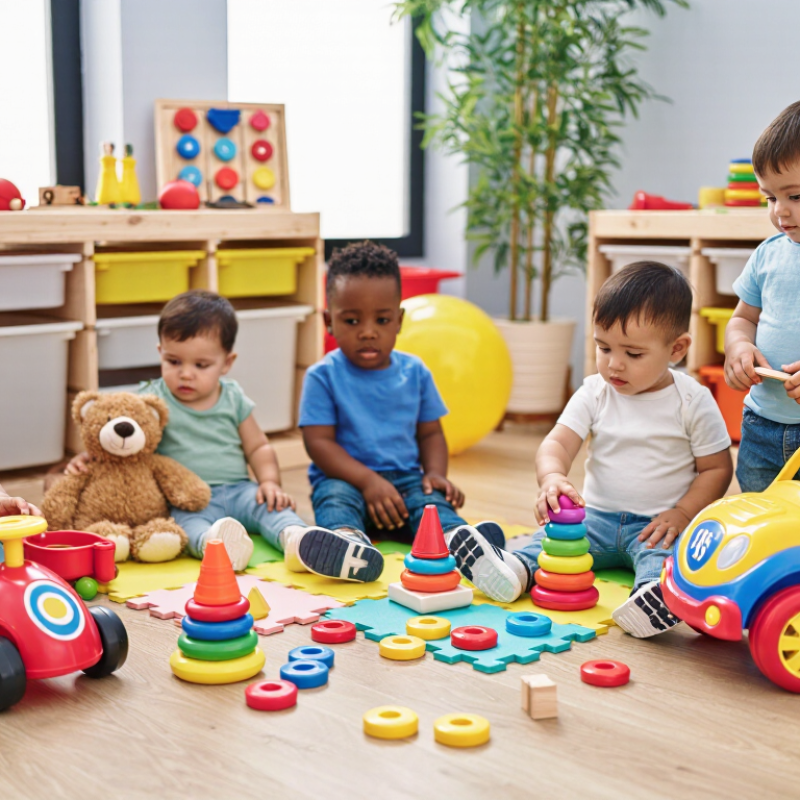
Global buyers should treat the 145,500 estimate as a design signal, not a distant statistic. The U.S. Consumer Product Safety Commission’s 2022 Toy-Related Injuries and Deaths report estimated 145,500 emergency-department-treated toy injuries among children under 14. It also recorded 11 toy-related deaths. This figure is not toddler-specific, so presenting it otherwise would be misleading. Still, toddlers face distinct risks because they explore with their mouths and have limited hazard awareness.
Define the age range before selecting products. For toddlers, prioritize large, firmly attached components, smooth edges, secure battery compartments, and short, strong pull points. Avoid loose magnets, accessible button batteries, and detachable pieces that can fit inside a child’s mouth. Ask suppliers for current test reports from accredited laboratories. Check choking, mechanical, flammability, chemical, and labeling requirements for each destination market. A general certificate may not cover every country.
In sourcing practice, buyers often overvalue bright colors and low unit prices. That shortcut is easy, and still weak. Review sample construction by twisting handles, opening compartments, and checking seams by hand. Request batch traceability and written age-grade evidence. The CPSC estimate shows why a visual inspection alone is insufficient. A toy may look harmless yet fail after repeated pulling or dropping. Even careful purchasing can miss a hidden weakness, so independent testing and post-market feedback should influence the next order.
| Tip | Buyer Dimension | Verified Data or Requirement | What Global Buyers Should Check | Priority |
|---|---|---|---|---|
| 1 | Define the intended age | Toddlers are commonly categorized as children approximately 12–36 months old. Age grading must reflect the toy’s actual design, hazards, and developmental suitability. | Use a clear age range on the packaging and product listing. Do not market a toy for toddlers if its parts, motion, or construction are intended for older children. | High |
| 2 | Use the injury estimate as a risk signal | The U.S. Consumer Product Safety Commission reported an estimated 145,500 toy-related injuries treated in U.S. emergency departments among children under 15 in 2022. | Treat injury prevention as a design and sourcing requirement. Review foreseeable misuse, falls, impact points, detachable parts, and supervision needs before purchase. | High |
| 3 | Control choking hazards | Small parts can present a choking hazard, particularly for children under 3. In the United States, toys intended for children under 3 must comply with applicable small-parts requirements under 16 CFR Part 1501. | Request small-parts testing, inspect detachable components, and check whether wheels, eyes, caps, beads, or accessories can become separated during reasonable use or abuse testing. | High |
| 4 | Evaluate magnets and batteries | Accessible high-powered magnets and button or coin batteries can cause severe internal injuries if swallowed. Battery compartments should be secured against access by young children. | Confirm battery-compartment screw security, retention after impact testing, magnet strength and accessibility controls, warning labels, and disposal instructions required in the destination market. | High |
| 5 | Choose durable construction | Toddler toys should withstand foreseeable drops, pulling, twisting, biting, and repeated handling without creating sharp edges or detachable hazardous parts. | Ask for mechanical and physical testing records. Examine seams, hinges, cords, wheels, handles, fasteners, and plastic edges after durability testing. | High |
| 6 | Check applicable toy standards | Common market frameworks include ASTM F963 in the United States, EN 71 in the European Union, and ISO 8124 as an international toy-safety series. Legal requirements vary by destination. | Identify every target market before production. Obtain current, product-specific laboratory reports rather than relying only on a general material certificate. | High |
| 7 | Review materials and chemical limits | Paints, coatings, plastics, textiles, and soft components may be subject to limits for substances such as lead, certain phthalates, and other restricted chemicals. | Request material declarations and chemical test reports for each component, including coatings, adhesives, inks, fragrances, and colorants. Confirm compliance with the destination market’s rules. | High |
| 8 | Assess cords, loops, and entanglement | Long cords, loops, ribbons, and straps can create entanglement or strangulation risks for young children, especially when attached to movable toys or pull toys. | Prefer short, securely attached components. Review cord length, loop formation, tensile strength, and foreseeable wrapping around the neck or limbs. | High |
| 9 | Match sensory features to toddler development | Toddlers generally benefit from simple cause-and-effect play, grasping, stacking, sorting, pushing, pulling, and supervised imaginative play. | Prioritize large easy-to-grip elements, moderate sound levels, stable bases, rounded surfaces, and intuitive controls. Avoid excessive flashing, loud output, or overly complex instructions. | Medium |
| 10 | Prepare multilingual compliance information | Warnings, instructions, age grading, tracking information, and importer or responsible-party details may be required in the language and format of the destination market. | Review packaging and online listings separately. Make warnings prominent, readable, durable, and translated accurately for every intended sales region. | Medium |
Age labels must match real developmental risks. A “3+” mark does not automatically prove compliance. In the United States, ASTM F963 covers mechanical, physical, chemical, flammability, and labeling requirements. EN 71 applies across European markets, while ISO 8124 offers internationally used safety principles. These systems overlap, but they are not identical.
Review small-parts testing, accessible battery compartments, sharp edges, pull strength, and chemical limits. The U.S. CPSC reported an estimated 231,000 toy-related emergency-department injuries in 2023. That figure shows why toddler age grading deserves careful review.
Confirm that the tested sample matches the production version. Packaging changes can alter warnings and instructions. Some buyers rely too heavily on certificates. That is a mistake worth reconsidering. Check traceability records, factory quality checks, and random samples before shipment. A toy passing one standard may still need additional national requirements. Short labels can hide complex decisions.
For global buyers, toddler toy safety should begin with CPSC requirements, not attractive packaging. The CPSC’s Toy-Related Deaths and Injuries report estimated 231,700 toy-related emergency-department injuries among U.S. children under 15 in 2023. Ten toy-related deaths were also reported. These figures make choking prevention a purchasing priority.
Check every detachable piece against 16 CFR 1501, especially for toys intended for children under three. A loose wheel, button eye, or plastic cap can become dangerous within seconds. Request third-party test reports, including small-parts testing, material safety checks, and age-grade verification. Packaging warnings cannot repair a poorly designed toy. Inspect samples yourself, too. Reports can be incomplete.
Magnets require extra caution. Ask laboratories to assess applicable requirements under 16 CFR 1262 and confirm whether any accessible magnet is high-powered. Test the toy after reasonable use, twisting, pulling, and dropping. A magnet hidden inside a cracked ball is still a serious hazard. The CPSC has repeatedly warned that swallowed high-powered magnets can attract through intestinal tissue, causing perforation or blockage. Keep supplier declarations, test dates, product versions, and corrective-action records. ASTM F963-23 also provides a useful technical benchmark for toy safety, although buyers should verify the exact legal requirements in each destination market. A checklist helps, but it can miss a brittle seam or a rushed design change. Recheck production samples. Safety is not a one-time document.
The U.S. CPSC small-parts test uses a cylinder approximately 1.25 inches (31.7 mm) in diameter and 2.25 inches (57.1 mm) long. A detachable component that fits completely inside this cylinder may present a choking risk for children under 3 years.
Before purchasing or importing toddler toys, check detachable buttons, wheels, eyes, batteries, and other small parts against the CPSC small-parts cylinder. Also inspect toys for accessible high-powered magnets, secure battery compartments, and age-appropriate warnings. Magnet requirements may apply when a magnet fits entirely in the small-parts cylinder and meets the applicable magnetic flux-index criteria under 16 CFR Part 1262.
Global buyers should treat chemical compliance as a buying decision, not a paperwork task. Toddler toys often contain soft plastics, coatings, adhesives, or painted wood. Each material can create a different testing concern.
Under EU REACH, check restricted substances and Substances of Very High Concern in articles. Ask suppliers for current material declarations, not recycled certificates from old projects. Under U.S. CPSIA requirements, review limits for lead and phthalates, especially in accessible parts. Children’s products may also require testing by an accepted third-party laboratory and supporting certification records.
A reliable process begins with a complete bill of materials. Match each color, surface coating, and plastic component to a test report. Confirm the report identifies the exact product, production batch, test methods, and laboratory accreditation. A generic “EN71 passed” statement is not enough for every chemical question. Neither is a supplier’s promise.
Keep sealed samples from the tested batch. Compare them with pre-production samples before placing a large order. Packaging, paint, and small accessories deserve attention too. They are easy to overlook. It is tempting to trust a familiar factory after one successful shipment. That can be a mistake. Formulas may change, and compliance documents can become outdated. Buyers should set retesting triggers, such as a new material, color, supplier, or production site. Local legal review remains useful, because REACH and CPSIA obligations can depend on product design, market, and sales channel.
Global buyers should treat ISO 8124 test reports as working evidence, not decorative paperwork. Ask for reports covering mechanical hazards, flammability, and migration of certain elements. Check the laboratory name, test date, product code, age grading, and sample photographs. The report must match the exact toddler toy, including paint, fabric, batteries, and packaging. A minor design change can invalidate an old report. That detail is often missed.
Recall data adds another practical filter. The U.S. Consumer Product Safety Commission estimated 231,000 toy-related emergency-department injuries among children under 15 in 2023. The EU Safety Gate 2023 report recorded 3,412 safety alerts, with toys among the most frequently notified categories. Search comparable products, supplier names, and hazard descriptions before placing a purchase order. Look for loose magnets, detachable eyes, accessible battery compartments, and cords that create entanglement risks. Ask suppliers for corrective-action records, not only clean-looking certificates.
Calculate landed cost before comparing quotations. Include the unit price, inspection, laboratory testing, freight, insurance, duty, customs handling, warehousing, and possible returns. A cheap sample may become expensive after a failed test or delayed shipment. Use a written cost sheet for every supplier. Recheck exchange rates and duty assumptions. My own caution: one inspection cannot prove consistent production. Order random samples from separate batches, then compare dimensions, seams, labels, and surface finishes. Perfect paperwork can still hide uneven factory control.