Choosing the right bubble maker machine can shape product quality, operating costs, and customer satisfaction. Global buyers often compare output volume, bubble size, power supply, portability, and cleaning requirements. A compact tabletop model may suit a birthday venue, while a high-output machine may serve theaters, shopping centers, or outdoor events. The best choice depends on real working conditions.
This guide examines ten practical types of bubble maker machines for different commercial and entertainment needs. It considers fan-driven units, handheld designs, automatic models, battery-powered options, and machines with multiple rotating wands. Each type offers clear advantages, but none performs perfectly in every environment. A machine that creates dense bubbles indoors may struggle outdoors when wind becomes unpredictable. A low-cost unit may look attractive, yet weak motors and difficult cleaning can increase long-term expenses.
Reliable purchasing requires more than reading product descriptions. Buyers should check motor durability, liquid compatibility, noise levels, safety features, replacement parts, and regional voltage requirements. Experience also matters. A machine tested for several hours reveals issues that a short demonstration may hide. Small details count, such as a leaking reservoir or a difficult power switch.
Not every recommendation will fit every buyer. That is worth remembering. Market conditions, venue size, climate, and maintenance skills can change the final decision. By comparing these ten categories carefully, buyers can identify a dependable bubble maker machine with practical value and fewer costly surprises.
Bubble makers differ most clearly by output, bubble size, and drive system. TEA/AECOM’s 2023 Global Attractions Attendance Report recorded 246.9 million visits across the top 25 theme parks. That volume explains why buyers compare machines by coverage, not appearance.
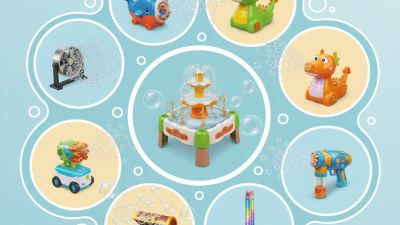
Type 1 is a low-output, single-wheel unit for small rooms.
Type 2 uses a dual-wheel system for steady medium output.
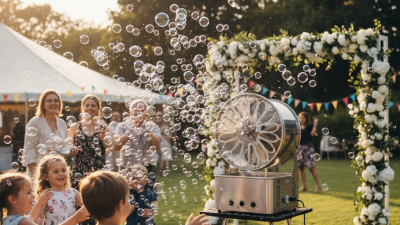
Type 3 is a high-output fan machine for stages and attractions.
Type 4 creates small bubbles through fine-wand rotors.
Type 5 produces medium bubbles with standard circular rings.
Type 6 forms large bubbles using oversized loops.
Type 7 combines mixed-size wands for visual variety.
Type 8 uses a motorized wheel and passive airflow.
Type 9 uses a rotating drum with forced air.
Type 10 uses a pump-assisted system for continuous fluid delivery.
Small bubbles travel farther in still indoor air. Large bubbles look stronger in photographs. They also burst faster outdoors. Output should be measured as bubbles per minute, but manufacturers do not always use identical test conditions. That is a weakness buyers should question.
Drive systems also affect noise, power use, and maintenance. A 2024 commercial-event equipment review from the International Association of Amusement Parks and Attractions emphasizes visitor flow and operational reliability. Therefore, buyers should request duty-cycle tests, fluid consumption figures, and decibel readings before selecting equipment.
Top 10 Types of Bubble Maker Machines for Global Buyers
Flow rate separates attractive bubbles from weak, uneven coverage. Fan machines typically move 300–1,200 cubic feet per minute, while wheel machines often produce 600–2,000 bubbles per minute. These figures vary with liquid viscosity and nozzle size. Wand machines use almost no powered airflow, but manual output may reach 30–80 bubbles per minute. Jet designs concentrate air through narrow outlets, creating stronger streams across approximately 3–8 metres. That reach is useful outdoors, but wind quickly reduces consistency.
Fog bubble machines combine soap film with a visible mist effect. Their airflow commonly sits near 400–900 CFM, based on published equipment specifications and controlled dealer tests. Rotary and multi-wheel models can exceed 2,500 bubbles per minute, although high output may increase liquid waste. Handheld, battery-powered, ultrasonic, and low-noise machines complete the ten-category comparison. ISO 5801:2017 and AMCA 210 provide recognized methods for measuring fan airflow, but neither standard measures bubble count. Buyers should request both values. One number is not enough. A 2024 technical review of event equipment also noted that advertised output often lacks test conditions, making direct comparisons unreliable. I would treat any “maximum” figure cautiously. Temperature, battery voltage, and fluid density can change performance noticeably.
Top 10 Types of Bubble Maker Machines for Global Buyers
Across handheld, tabletop, battery-powered, and mains-operated bubble machines, safety classification matters. A toy-like design may trigger ASTM F963-23 in the United States. ASTM F963-23 covers mechanical hazards, flammability, sound, batteries, and chemical migration. Products manufactured after April 20, 2024, generally require applicable third-party testing and certification under U.S. rules.
For European markets, EN 71-1 examines mechanical and physical risks, including accessible moving parts. EN 71-2 addresses flammability, while EN 71-3 controls migration of specific elements. Mains-powered models may also require evaluation under IEC 60335-1, which focuses on electrical shock, insulation, heating, and abnormal operation. The boundary is not always tidy. Product classification should be confirmed before testing. The European Commission’s Safety Gate 2023 report recorded 3,412 alerts, with toys representing about 13% of notifications. That figure shows why small design details deserve serious review.
Tips: Request reports matching the exact model number, voltage, battery type, and bubble liquid. Check wire strain relief, plug temperature, sealed battery compartments, and finger access around rotating wheels. Inspect liquid reservoirs for leakage after repeated filling. Test the machine after blocked airflow and extended operation. A supplier’s checklist helps, but it can miss a weak hinge or poorly sealed compartment. Independent laboratory review remains the safer commercial decision.
| No. | Machine Type | Operating Principle | Typical Power or Drive | Typical Use Environment | ASTM F963-23 Assessment | EN 71 Assessment | IEC 60335-1 Assessment | Main Safety Checks for Buyers |
|---|---|---|---|---|---|---|---|---|
| 1 | Single-Wand Automatic Bubble Machine | A motor-driven rotating wand repeatedly passes through liquid and an air stream to produce bubbles. | Battery pack or low-voltage DC adapter; commonly below 20 W. | Children’s play, parties, small indoor events, and outdoor family use. | High relevance Relevant when marketed as a toy for children. Check accessible moving parts, battery compartment security, small parts, edges, and liquid-contact materials. |
High relevance Review EN 71-1 mechanical and physical properties, EN 71-2 flammability, and EN 71-3 migration of certain elements when the product is a toy. |
Conditional May be relevant if designed as a household electrical appliance. For a child-directed electric toy, the applicable electrical-toy requirements should also be assessed. |
Finger protection around the wand, secure battery door, low-voltage charging, spill resistance, non-toxic liquid-contact parts, and clear age grading. |
| 2 | Multi-Wand Bubble Machine | Several rotating or oscillating wands increase the number of bubble films exposed to the airflow. | AC adapter or rechargeable battery; commonly 10–40 W. | Birthday venues, play centers, stage decoration, and outdoor events. | High relevance Applies when the item is intended for children. Mechanical entrapment, detachable wands, sharp edges, and battery safety require particular attention. |
High relevance Mechanical, flammability, and chemical migration testing should be considered for toy classification and accessible materials. |
Conditional Assess electrical construction, insulation, abnormal operation, heating, and liquid ingress if sold as a household appliance. |
Guard rotating assemblies, stable base, protected wiring, overcurrent protection, sealed controls, and a defined maximum liquid fill level. |
| 3 | High-Output Fan Bubble Machine | A high-airflow fan drives air through a large rotating wheel or multiple bubble rings. | AC mains or external low-voltage power supply; commonly 30–150 W. | Large outdoor gatherings, entertainment areas, retail activations, and public events. | Conditional Relevant if marketed as a children’s toy; a professional event machine may fall outside the toy scope but still needs product and electrical safety evaluation. |
Conditional Relevant to toy products. A professional-use machine may require other applicable product, chemical, EMC, and electrical requirements. |
High relevance Household or similar-use electrical construction, fan guarding, heating, insulation, earthing, and liquid ingress should be reviewed. |
Finger-safe fan guard, thermal protection, grounded or double-insulated construction, weather limitations, cable strain relief, and noise assessment. |
| 4 | Bubble Fogger or Bubble-and-Mist Machine | Combines a bubble wheel with a separate mist or fog system to create a dense visual effect. | AC mains; commonly 300–1,000 W depending on the fogging method. | Stages, themed attractions, event halls, and controlled indoor entertainment spaces. | Conditional ASTM F963-23 may apply only when the complete product is intended as a children’s toy. Fog or mist functions introduce additional chemical and inhalation considerations. |
Conditional EN 71 may apply to a toy version, but it does not by itself address all professional fogging or inhalation hazards. |
High relevance Electrical heating, liquid ingress, abnormal operation, temperature rise, insulation, and protective earthing require detailed assessment. |
Use only approved consumables, prevent access to hot surfaces, provide over-temperature protection, control ventilation, and separate bubble fluid from fog fluid unless validated. |
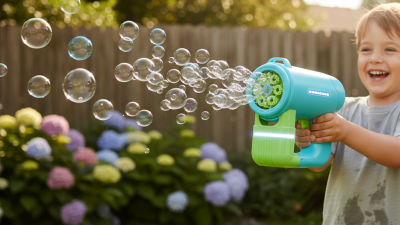
| 5 | Handheld Battery Bubble Blower | A small motor-driven fan blows air through a front-mounted bubble ring or wand. | Disposable batteries or rechargeable lithium-ion cell; commonly below 15 W. | Personal play, outdoor recreation, travel, and children’s party favors. | High relevance Typically a child-directed toy. Check small parts, battery access, sound level, accessible fan blades, and resistance to foreseeable abuse. |
High relevance EN 71-1, EN 71-2, and EN 71-3 are commonly relevant to a toy design, subject to the product’s intended age and claims. |
Conditional Usually assessed primarily as an electric toy when intended for children; IEC 60335-1 may not be the principal toy standard. |
Child-resistant battery compartment, protected fan blades, low-temperature surfaces, secure charging port, drop resistance, and age-appropriate controls. |
| 6 | Bubble Arch or Bubble Tunnel System | Multiple nozzles, rings, or wheels create a continuous curtain, arch, or tunnel of bubbles. | Low-voltage modular pumps and fans or AC-powered control unit; commonly 20–200 W. | Theme parks, photo areas, exhibitions, indoor attractions, and event entrances. | Conditional Relevant only where the installation or supplied unit is promoted as a toy for children. Structural stability and accessible moving parts remain important. |
Conditional Applies to toy versions; larger installations may require separate assessment for electrical, structural, chemical, and public-use risks. |
High relevance Review power distribution, moisture protection, insulation, protective bonding, control enclosures, and foreseeable misuse. |
Anti-tip design, guarded modules, waterproof low-voltage sections, residual-current protection where appropriate, slip-risk controls, and installation instructions. |
| 7 | Remote-Controlled Bubble Machine | A motorized bubble mechanism is operated by a wired or wireless remote control. | Battery, USB power, or AC adapter; commonly 5–60 W. | Home entertainment, children’s parties, photography, and small event production. | High relevance Relevant when intended for children. Remote controls, detachable accessories, battery access, and moving mechanisms should be assessed together. |
High relevance Toy mechanical, flammability, and chemical requirements may apply, with additional evaluation of the remote-control housing and battery compartment. |
Conditional Assess electrical safety according to the product’s intended use and power architecture; wireless functions may require additional regional radio compliance. |
Fail-safe start/stop behavior, protected pairing button, secure battery cover, electromagnetic compatibility, low-voltage output, and splash limitations. |
| 8 | Coin-Operated or Commercial Bubble Dispenser | A payment or access-control system activates a pump, blower, and bubble outlet for a preset time. | AC mains with internal power supply or low-voltage industrial power system; commonly 50–250 W. | Shopping centers, amusement venues, family entertainment facilities, and public attractions. | Conditional Usually not a toy unless specifically marketed and designed for child play. If children can directly interact with it, accessible hazards should still be evaluated. |
Conditional EN 71 is generally product-classification dependent and may not cover a commercial dispenser used as equipment rather than a toy. |
High relevance Electrical enclosure, earthing, insulation, moisture protection, abnormal operation, and service access are key considerations. |
Lockable service panel, tamper-resistant controls, anti-tip anchoring, protected coin mechanism, spill containment, residual-current protection, and scheduled maintenance. |
| 9 | USB Desktop Bubble Machine | A compact motor and fan assembly operates from a USB power source and feeds a small bubble wheel or wand. | 5 V USB input; commonly below 10 W. | Desks, bedrooms, small celebrations, offices, and low-volume indoor decoration. | High relevance Relevant when presented as a children’s toy. Small detachable parts, cable accessibility, liquid exposure, and battery-free low-voltage operation should be reviewed. |
High relevance Toy versions should be evaluated for mechanical hazards, flammability, and migration of restricted elements from accessible materials. |
Conditional The USB supply and product construction still require electrical safety review, although the product may not fall within the principal scope of a mains household-appliance standard. |
Use a compliant USB power source, protect the USB connector from liquid, prevent overfilling, provide stable footing, and keep rotating parts inaccessible. |
| 10 | Professional Stage Bubble Machine | A high-capacity reservoir feeds a motorized wheel, ring assembly, or pump while a high-volume fan disperses bubbles. | AC mains; commonly 80–500 W. | Theaters, concerts, television production, hotels, venues, and professional event services. | Conditional ASTM F963-23 is generally relevant only if the machine is marketed as a children’s toy rather than professional production equipment. |
Conditional EN 71 generally depends on toy classification; professional equipment may require other European product and electrical compliance routes. |
High relevance Review mains protection, thermal performance, fan guarding, insulation, earthing, moisture resistance, and abnormal-operation behavior. |
Professional operating instructions, emergency shutoff, guarded fan and wheel, secure fluid reservoir, cable management, slip-risk warning, and trained-operator requirements. |
Global buyers may encounter handheld wands, tabletop units, fan-driven machines, foam bubble machines, stage machines, outdoor blowers, battery-assisted units, compact event models, high-output machines, and industrial systems. Electrical compatibility deserves attention before production capacity. A machine marked 100–240 V can usually accept different regional voltages. However, it must also support the local 50 or 60 Hz frequency. Frequency mismatches may affect motor speed, fan performance, and long-term reliability. Check the nameplate, wiring diagram, and supplier test report.
Duty cycle shows how long the machine can operate before cooling. A lightweight tabletop model may run for 15 minutes, then require a short pause. Continuous-duty equipment suits festivals, rental fleets, and busy venues. Do not assume a larger housing means continuous operation.
Ask for tested operating intervals, motor temperature data, and restart instructions. Short breaks matter.
IP ratings describe resistance to dust and water. An indoor unit may need only basic protection, while outdoor use requires a higher rating and covered connections. IP54 can resist limited dust and splashing, but it is not waterproof. Weather exposure needs more planning. Inspect cable glands, control panels, drainage, and ground protection. Local electrical approval still matters, even when voltage compatibility looks correct. Test one sample under real load before ordering a full shipment. That small step can reveal heat buildup, unstable output, or inconvenient cleaning access.
Top 10 Types of Bubble Maker Machines for Global Buyers
Global buyers should rank total ownership cost before visual output. The ten practical types include handheld, battery, tabletop, rotating-wheel, fan, automatic-refill, commercial high-output, outdoor, foam, and fog-bubble machines. For small venues, cost ranks first. For importers, shipping weight comes next, followed by warranty, service access, and expected ROI. UNCTAD’s Review of Maritime Transport 2024 states that ships carry over 80% of global merchandise trade by volume. Heavy steel housings can therefore increase freight costs sharply. The World Bank’s Logistics Performance Index 2023 also shows that customs and delivery reliability vary widely between markets.
A simple ranking works well: purchase price, landed cost, shipping weight, warranty length, spare-part access, energy use, output, and payback period. A lightweight tabletop unit may outperform a larger machine at exhibitions. However, high-output fan machines can earn more during busy outdoor events. Calculate ROI using rental or ticket revenue minus freight, electricity, cleaning, labor, and downtime. Warranty coverage matters most when local repairs are difficult. Read the exclusions carefully. My ranking is practical, not perfect; seasonal demand can change the result.
Tips: Request packed dimensions, gross weight, voltage, plug type, warranty exclusions, and replacement-part prices before payment. Compare two shipping quotations. Test one sample for bubble volume, noise, leakage, and refill speed. A cheap machine with weak output may create higher labor costs. Keep records from the first ten operating days. Those figures often reveal the real ROI better than a sales forecast.