Choosing a reliable bubble blower supplier requires more than comparing catalog prices. Global buyers must examine product quality, production experience, export capability, and communication standards. This guide introduces ten suppliers that deserve closer attention across different markets and business sizes.
The evaluation considers several practical details. These include bubble output, motor consistency, battery safety, plastic quality, packaging strength, minimum order quantities, and lead times. A dependable supplier should provide clear specifications, product samples, inspection support, and accurate shipping documents. Certifications may also matter, depending on the destination market and intended use. Small details count. For example, a weak battery compartment can create returns after only a few outdoor events.
Our research approach combines supplier information, buyer-focused criteria, and common sourcing concerns. We look beyond polished websites. Factory capacity, response speed, customization experience, and after-sales support can reveal more. Still, no supplier is perfect. Prices change, production schedules slip, and product performance may vary between batches. Buyers should verify current data directly and request samples before placing large orders. That step is easy to overlook.
Whether you need promotional toys, party equipment, seasonal merchandise, or retail-ready products, this list aims to support careful decisions. Each supplier should be judged against your market, budget, compliance needs, and delivery expectations. A suitable bubble blower is not always the cheapest option. It should perform consistently, arrive safely, and remain practical for long-term business use.
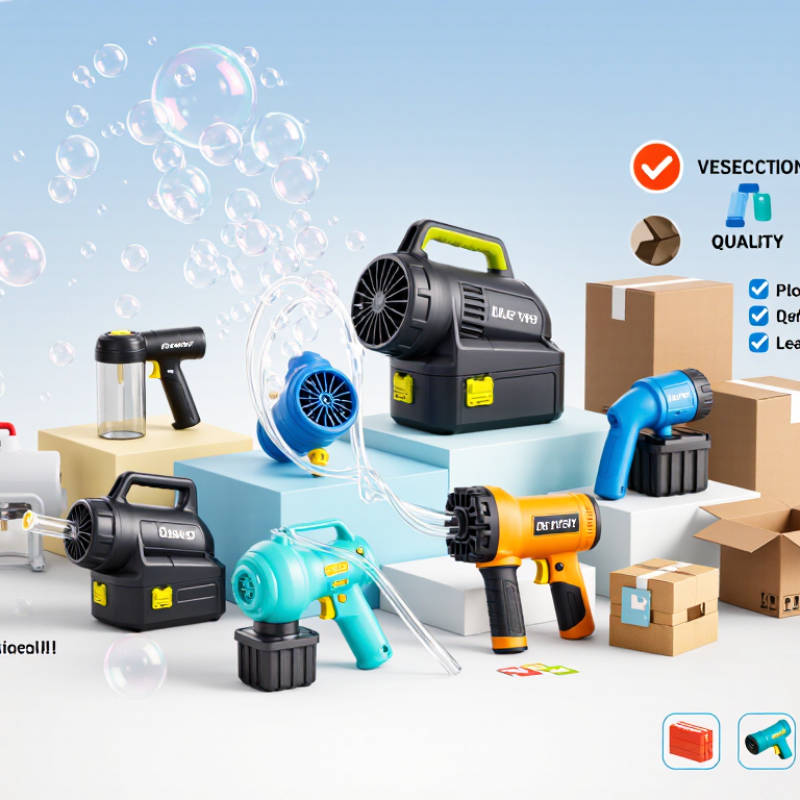
A reliable bubble blower supplier does more than offer a colorful product catalog. They understand children’s product use, packaging risks, and repeated handling during shipping. In my experience, a supplier’s sample often reveals more than a polished quotation. Check the trigger, cap, bottle seal, and wand connection. Small defects can become costly returns.
Professional suppliers provide clear material details, production photos, and realistic lead times. They should explain quality checks, carton strength, and storage conditions without avoiding difficult questions. Independent testing documents can support safety claims, but buyers should verify their scope and date. A trustworthy supplier also confirms minimum order quantities, replacement policies, and communication channels. Promises alone are not enough.
Tips: Request samples from different production batches. Test the blower after opening, closing, dropping, and repeated use. Compare liquid leakage, print durability, and package damage. Ask for a written inspection checklist. Keep records of approvals and agreed specifications. A very low price may seem attractive, yet it can hide thinner plastic, weaker seals, or inconsistent output. I have sometimes focused too heavily on unit cost. That was a mistake. Reliability becomes clearer when a supplier responds quickly to defects and offers practical solutions. Good suppliers may not promise perfection, but they show evidence, accept reasonable questions, and improve when problems appear.
Top 10 Bubble Blower Suppliers for Global Buyers
Comparing global bubble blower manufacturers requires more than checking unit prices. Product safety should lead the evaluation. ISO 8124 and ASTM F963 provide recognized toy safety frameworks, while EN 71 supports European market access. Ask for current test reports, batch numbers, and laboratory details. A certificate without traceability is weak evidence.
Material selection also matters. Request specifications for plastic type, colorants, seals, and bubble solution ingredients. Check whether the solution has documented microbial testing and stable performance after storage. Circana reported that global toy sales declined by 7% in 2023, increasing pressure on suppliers to control cost without reducing quality. The cheapest offer may create expensive returns. Sometimes, it does.
Production capacity should be verified through factory records, not promises. Review monthly output, mold ownership, inspection procedures, and defect rates. A practical sample test includes repeated pumping, leakage checks, cap fitting, and drop testing on tiled floors. Packaging deserves attention too. The UNEP “Turning off the Tap” report projects plastic waste could nearly triple by 2060, so buyers should compare recycled content, packaging weight, and carton efficiency.
Delivery reliability depends on more than quoted lead time. Examine port options, buffer stock, export experience, and response speed when specifications change. Ask for a pilot order before committing to large volumes. This step can expose inconsistent bubbles, loose components, or fading colors. It adds time, but skipping it is often the bigger mistake. Data should guide the ranking, yet real handling experience still reveals problems spreadsheets miss.
This chart presents a practical procurement-weighting model for screening global bubble blower suppliers. Product performance, safety compliance, reliability, energy efficiency, logistics capability, and after-sales support are considered without displaying company names or brand-level data. Higher percentages indicate greater importance during supplier comparison.
Global buyers often compare more than product appearance. They check output speed, leak resistance, packaging, and after-sales support. The strongest suppliers serve different purchasing needs. A high-volume factory offers stable production and competitive pricing. A custom-design supplier develops themed shapes, colors, and private packaging. A safety-focused manufacturer provides smoother edges and child-friendly materials. A refill specialist improves liquid consistency and reduces nozzle blockage. An export-oriented supplier manages documents, cartons, and shipping schedules. A small-batch workshop supports market testing with lower order quantities.
A battery-product expert improves motor performance and operating time. A manual-toy supplier offers simple designs with fewer failure points. An eco-material supplier develops recyclable bottles and reduced-plastic packaging. A quality-control partner provides batch samples, inspection photos, and traceable production records. These core strengths should match the buyer’s sales channel, not just the lowest quotation.
Ask for sample testing under real conditions. Check bubble size, trigger comfort, drying time, and leakage after transport. Small details matter.
Still, supplier comparisons are rarely perfect. A factory may promise fast delivery, yet seasonal demand can change the schedule. A premium sample may also differ from mass production.
I would request a pilot order and inspect random units before scaling. Clear specifications, written tolerances, and regular communication reduce avoidable surprises. Suppliers with transparent limitations often prove more dependable than those making flawless claims.
When global buyers compare the top 10 bubble blower suppliers, product quality should lead the evaluation. A reliable supplier uses consistent plastic thickness, secure caps, and clean, child-friendly materials. Each unit should produce steady bubbles without leaking after repeated use. Small details matter. Buyers should request pre-shipment samples, batch photos, and basic inspection records. Quality claims without evidence are weak.
Customization can include bottle shapes, liquid colors, labels, gift boxes, and retail-ready packaging. Clear drawings and approved samples reduce production mistakes. Some suppliers offer flexible mold development, while others only adjust existing designs. That difference affects both lead time and tooling costs. An experienced buyer should confirm ownership of custom artwork and define acceptable color variation. Perfection is unlikely, so inspection standards must be written clearly.
Pricing should cover samples, molds, packaging, inland transport, and international freight. The lowest quotation may hide extra charges. Ask for a detailed cost sheet. Production capacity also deserves practical checks: monthly output, peak-season schedules, minimum order quantities, and backup equipment. A supplier claiming high capacity should provide a realistic timeline, not just a large number. In one common sourcing mistake, buyers compare unit prices but ignore delayed delivery costs. A small trial order can reveal communication gaps, filling accuracy, and packing strength before a larger commitment.
Selecting the right bubble blower supplier requires more than comparing unit prices. Circana’s 2023 Global Toy Industry Performance Report recorded a 7% decline in tracked toy sales, increasing pressure on inventory planning. Global buyers should request production samples, not only catalog images. Test bubble volume, trigger pressure, liquid leakage, and nozzle consistency. A good sample should perform after repeated use, not just during a sales video. Ask for batch records, material declarations, and test reports aligned with ISO 8124, ASTM F963, or applicable regional standards.
Supplier reliability also depends on logistics and communication. UNCTAD’s Review of Maritime Transport 2024 states that shipping carries over 80% of global merchandise trade by volume. Therefore, buyers should compare confirmed lead times, carton dimensions, port options, and landed costs. Check whether the supplier explains delays clearly. Vague answers are expensive later. I have seen low quotations hide weak packaging and costly replacements. That mistake is easy to repeat. A practical audit should review factory capacity, quality-control staff, corrective-action records, and traceability from plastic resin to finished units. Payment terms matter, but response speed matters too. Request a small pilot order before committing to seasonal volume. Supplier scorecards can include defect rate, on-time delivery, sample accuracy, documentation quality, and after-sales response time. Perfect forecasts are impossible. Clear evidence is still available.